

Rental Income vs. Real Profit: The Numbers Every Investor Must Know
Rental Income vs. Real Profit: The Numbers Every Investor Must Know
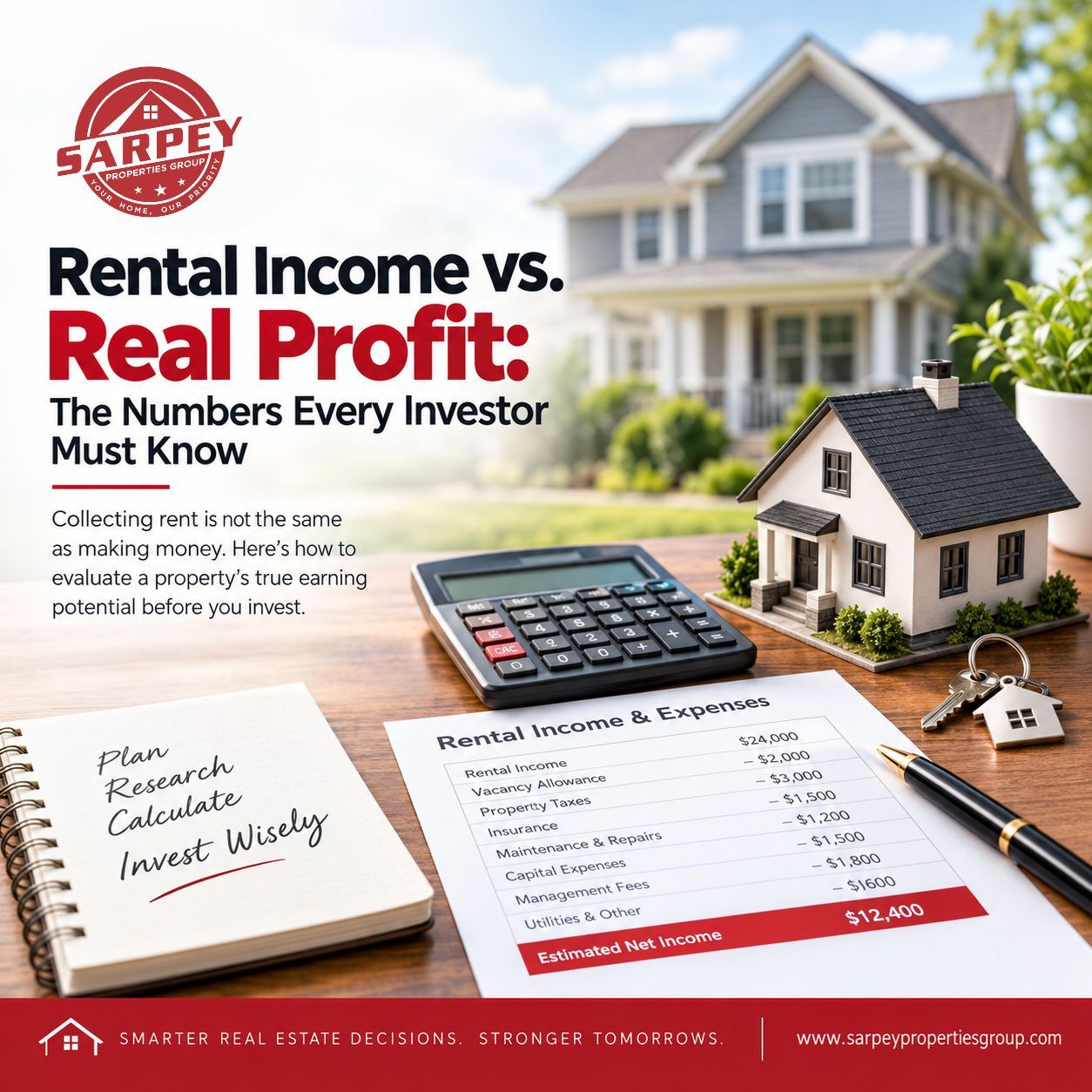
Collecting rent is not the same as making money. Here's how to evaluate a rental property's true earning potential before you invest.
Imagine finding a beautiful property in Delaware, Pennsylvania, or Maryland. The neighborhood looks promising, the home is in good condition, and similar properties appear to be renting for an attractive monthly amount. At first glance, it seems like an excellent investment.
But here's the question every potential landlord should ask: How much of that rental income will you actually keep?
A property can generate impressive rental income and still deliver disappointing returns once expenses, vacancies, and unexpected repairs enter the picture. That's why evaluating a rental property requires more than looking at its purchase price and estimated monthly rent. It requires a realistic understanding of what it costs to own, operate, and maintain the property over time.
If you're considering your first rental investment—or adding another property to your portfolio—let's walk through the numbers that matter most.
1. Start With Realistic Rental Income, Not the Highest Asking Price
It's tempting to look at the most expensive rental listing in the neighborhood and assume your property could command the same amount. However, advertised rent doesn't always reflect the amount a property will actually rent for.
Instead, research comparable rental properties in the same neighborhood. Look for homes with similar bedroom and bathroom counts, square footage, condition, amenities, and access to employment centers, schools, transportation, and other local conveniences.
Pay attention to how long comparable homes remain available and whether listings show signs of price reductions. Where possible, verify actual achieved rents through reliable local sources or a knowledgeable property manager.
For example, if similar homes are advertised for $2,000 per month, don't automatically assume yours will earn that amount. Differences in condition, location, included utilities, and rental demand may affect what tenants are willing to pay.
A conservative estimate based on credible comparisons is more useful than an optimistic number that makes the investment look better than it really is.
2. Remember That Your Property Won't Always Be Occupied
One of the easiest expenses to overlook is vacancy.
Even a desirable rental property can experience gaps between tenants. A tenant may move out unexpectedly, repairs may be needed before the next lease begins, or it may take longer than expected to find a qualified renter.
Let's say your property could earn $2,000 per month. That represents $24,000 in potential gross rent over a full year—but only if it remains occupied and rent is collected throughout all 12 months.
If you experience one vacant month, your rental income falls to $22,000 before expenses. Two vacant months would reduce it to $20,000.
That's a significant difference, and it doesn't include the cost of cleaning, advertising, screening applicants, or preparing the property for a new tenant.
When evaluating an investment, include a reasonable vacancy and turnover allowance based on local market conditions. Don't build your financial plan around the assumption that every month will be perfect.
3. Budget for Maintenance Before Something Breaks
Every property requires upkeep. Even a home that looks move-in ready will need routine maintenance, and some repairs will arrive when you least expect them.
Think about HVAC servicing, plumbing leaks, appliance repairs, exterior maintenance, landscaping, pest control, and other recurring responsibilities. These costs may seem manageable individually, but they can add up over a year.
Then there are major capital expenses. A roof replacement, aging HVAC system, water heater, or significant plumbing repair can cost thousands of dollars.
This is why maintenance and capital expenditures should be considered separately in your analysis. Routine maintenance covers the ongoing care of the property, while capital reserves help prepare you for larger replacements and improvements.
A property that produces positive cash flow today may become financially stressful if you're unprepared for a major repair tomorrow.
Smart investors don't just ask whether they can afford to buy a property. They ask whether they can afford to keep it.
4. Add Up the Expenses That Don't Always Get the Attention They Deserve
Your mortgage payment may be the largest monthly expense, but it isn't the only one.
Property taxes can affect your annual operating costs, and insurance premiums may vary depending on the home's location, condition, coverage, and risk factors. If the property is in an area exposed to flooding or other specific hazards, insurance availability and cost deserve particular attention.
You should also determine who will pay utilities, whether the property has homeowners association fees, and whether any local licensing, inspection, registration, or rental compliance costs apply.
If you plan to hire a property manager, include that fee as well. Professional management can save time and help with tenant communication, rent collection, and maintenance coordination, but it reduces the income available to you.
And if you're managing the property yourself, remember that your time has value. Marketing vacancies, responding to tenant concerns, coordinating contractors, and handling paperwork all require attention.
The goal isn't to assume every possible expense will occur immediately. It's to identify the likely costs, estimate them reasonably, and avoid treating gross rent as spendable profit.
5. Run the Numbers With a Realistic Example
Let's look at a simplified illustration of a rental property expected to rent for $2,000 per month.
| Annual income and expenses | Illustrative amount |
|---|---|
| Potential gross rent | $24,000 |
| Vacancy allowance | −$2,000 |
| Property taxes | −$3,000 |
| Insurance | −$1,500 |
| Routine maintenance | −$1,200 |
| Capital expense reserve | −$1,500 |
| Management costs | −$1,800 |
| Owner-paid utilities and other costs | −$600 |
| Estimated amount remaining | $12,400 |
In this example, the property generates $24,000 in potential annual rent, but approximately $12,400 remains after the listed allowances and operating expenses.
That's before mortgage payments, income taxes, and any other costs not included in the illustration.
Notice how different the result looks from the original $24,000 rental-income figure. This is why evaluating a property based on rent alone can be misleading.
These numbers are hypothetical, not a market estimate for Delaware, Pennsylvania, or Maryland. Actual costs will depend on the property, financing, location, rental demand, and your management approach.
For a more complete analysis, calculate your net operating income (NOI) by subtracting operating expenses from effective rental income. NOI generally excludes mortgage payments, income taxes, and capital expenditures. Then estimate your actual cash flow by accounting for debt service, capital spending, and other applicable cash expenses. Keep your accounting categories consistent so you don't count the same expense twice.
6. Check Local Rental Rules Before You Commit
A property's financial potential also depends on whether you can legally rent it under the conditions you expect.
Before purchasing, investigate the applicable state and local requirements. Depending on the location, you may need to consider rental licenses, property registration, inspections, housing standards, lead-related requirements, occupancy rules, security deposit regulations, and local landlord-tenant laws.
Homeowners associations and condominium associations may impose additional rental restrictions, minimum lease terms, approval procedures, or limits on the number of units that can be rented.
These details matter. A property that appears financially attractive may not suit your plans if the association restricts rentals or the property needs substantial work to meet applicable requirements.
If you're exploring opportunities in Delaware, Pennsylvania, or Maryland, verify the requirements for the specific municipality and property rather than assuming the rules are identical across state lines.
Doing this research early can help you avoid expensive surprises after closing.
7. Ask Yourself: Would This Investment Still Work if Things Don't Go According to Plan?
Here's a useful test: revisit your calculations using less favorable—but plausible—assumptions.
What happens if the property rents for slightly less than expected? What if it remains vacant longer than anticipated? Could you handle a substantial repair without relying on rental income that hasn't arrived? Would the investment still make sense if insurance premiums, taxes, or management costs increased?
You don't need to predict every future expense perfectly. That's impossible. What you need is a financial plan that acknowledges uncertainty.
It may also help to compare the property's expected cash flow with the total cash you'll invest, including the down payment, closing costs, initial repairs, and other acquisition expenses. Depending on your goals, you may also evaluate cash-on-cash return, cap rate, and long-term appreciation potential.
Just remember that these are different measures of investment performance. A projected return is not a promise, and property values, rents, expenses, and market conditions can change.
The best investment isn't necessarily the property with the biggest projected return. It's the one whose risks, costs, and potential benefits make sense for your financial situation.
Make Your Next Property Decision With Confidence
Rental property ownership can be a meaningful part of a long-term wealth-building strategy, but success starts with asking the right questions and looking beyond the most attractive numbers.
Research realistic rent. Account for vacancies. Budget for maintenance and major replacements. Understand taxes, insurance, utilities, and management costs. Check local rental rules. Most importantly, leave room for uncertainty.
If you're considering a rental property in Delaware, Pennsylvania, or Maryland, Sarpey Properties Group can help you navigate the property search and identify important questions to investigate before making a purchase.
Our goal is to help you approach real estate decisions with better information, thoughtful planning, and a clearer understanding of the property you're considering.
Before you fall in love with the potential rental income, take the time to understand the real numbers. Your future self—and your investment budget—will thank you.
Ready to explore your next real estate opportunity?
Visit www.sarpeypropertiesgroup.com to connect with Sarpey Properties Group and take the next step toward making a more informed property decision.
Disclaimer: This article is for general educational purposes only and does not constitute financial, tax, legal, or investment advice. The example is hypothetical and does not represent guaranteed returns or current market figures. Actual rental income, expenses, financing costs, and investment performance vary by property and location. Consult qualified local real estate, tax, legal, insurance, and financial professionals before making an investment decision.
Categories
- All Blogs (45)
- 2026 Housing Market (2)
- Buyer Education (3)
- Buyer Resources (9)
- buyer strategy (4)
- Buyer tips (7)
- buying power (2)
- buying power, (1)
- Buying Tips (5)
- Client success stories (2)
- delaware home (1)
- Delaware Real Estate (30)
- delaware realtor (6)
- energy efficiency (1)
- First time home buyer (12)
- home affordability (2)
- Home buyer (11)
- Home buying (21)
- Home Buying & Selling (5)
- home buying and selling (21)
- home buying tips (10)
- home financing (3)
- home improvement (1)
- home inspections (4)
- home owner tips (2)
- home ownership (4)
- home seller tips (2)
- home sellers (2)
- home selling (11)
- home selling tips (12)
- home staging (3)
- home valuation (6)
- homebuyer tips (2)
- Homeownership (11)
- Homeownership Buyer Education (2)
- house (8)
- house buying guide (7)
- house hunting (7)
- housing market forecast (2)
- housing market trend (4)
- interest (4)
- interested rates (3)
- Landlord Tips (2)
- Lifestyle & Community Guides (1)
- Location & Lifestyle (1)
- market (7)
- market, (1)
- maryland home (2)
- Maryland Real Estate (32)
- maryland realtor (7)
- mortgage (5)
- mortgage and financing (6)
- mortgage approval (2)
- mortgage loans (1)
- open house tips (2)
- pennsylvania home (2)
- Pennsylvania Real Estate (31)
- pennsylvania realtor (6)
- property (2)
- Property Disclosure (2)
- property maintenance (2)
- Property Ownership (1)
- Real Estate Advice (22)
- real estate education (3)
- Real Estate Finance (1)
- Real Estate Investment (3)
- Real Estate Market Insights (8)
- real estate market trends (2)
- real estate marketing (8)
- real estate negotiation (4)
- Real Estate Planning (3)
- real estate professionals (9)
- real estate selling tips (5)
- Real estate tips (15)
- Real estate, (15)
- Relocation & Moving (2)
- rental properties (2)
- Rental Property Investing (1)
- residential real estate (5)
- rural property buying (2)
- Sarpey (14)
- Sarpey Properties Group (15)
- seller preparation (1)
- seller resources (7)
- seller strategies (2)
- seller strategy (1)
- Selling vs Renting (1)
- tax (3)
- Tri-State Real Estate (3)
- wealth building (3)
Recent Posts










"My job is to find and attract mastery-based agents to the office, protect the culture, and make sure everyone is happy! "